Medicine Buddha objects: what are they for?
Statue, thangka, mala, bowl, lamp, incense: the role of each object in a tradition, with no magic promise.
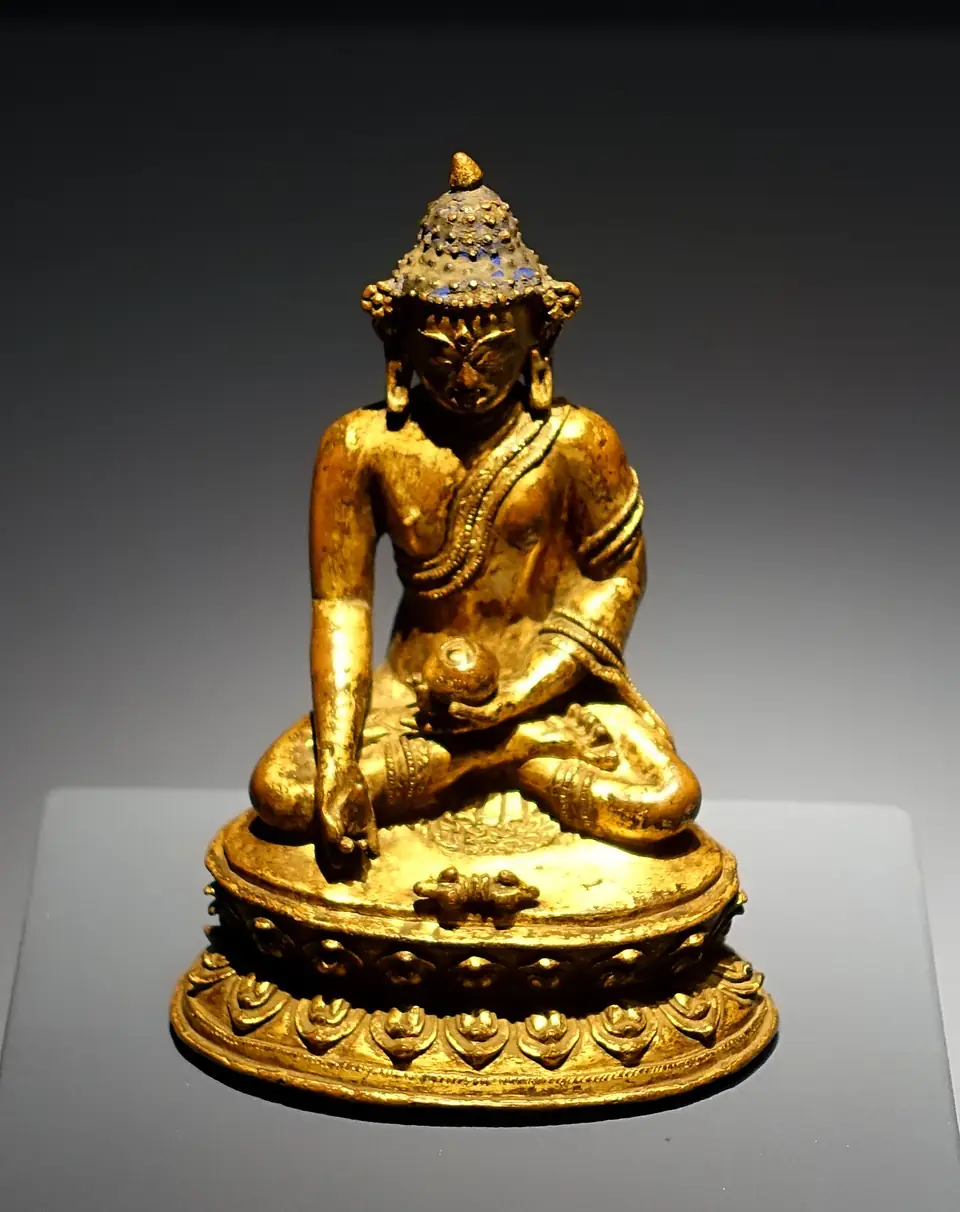
Many objects in the catalogue come from the same world: a statue on an altar, a mala in the hand, a lamp before the image. What is each for, according to tradition?
The statue and the thangka
They are supports: they recall the Buddha’s presence and help visualisation. In Tibetan traditions the statue is often filled with rolled mantras and sacred substances, then consecrated. See choosing a statue and the statues.
The mala
A rosary of 108 beads (or 21 or 27) for counting recitations. Lapis lazuli beads recall the Buddha’s colour; other common materials are wood, bodhi seed or crystal. The malas in the catalogue are sorted by material.
Water offerings
Seven bowls of clear water, lined up before the image, are a classic Tibetan offering. They symbolise hospitality (drinking water, washing water, flowers, incense, light, perfume, food). The water is renewed each morning.
The lamp
Light is at the centre of the sūtra. Butter lamps (or oil lamps) are lit as an offering; Xuanzang’s text speaks of forty-nine lamps for one specific rite. Most practitioners today are content with a flame or a candle.
Incense
It purifies the air and marks the time of practice. In Japan, incense sticks are burned before Yakushi in temples.
The bell and the vajra
The bell (gantā) evokes wisdom and the vajra method: together they are held in the hands of the Tibetan practitioner during certain rites. They are not necessary for a simple practice.
Flags, books, music
Prayer flags carry mantras; books, the sūtra; music, recitations. See books and music.
How to treat them
Tradition asks that they be treated with respect: an image of the Buddha is not placed on the floor or in a dirty place, and one does not step over it. See setting up an altar.
Sources
Common usages of Tibetan, Chinese and Japanese tradition; Raoul Birnbaum, The Healing Buddha (1979). Practices vary from one school to another.
Read the articleThe twelve vows and the seven Medicine Buddhas