The Medicine Buddha thangka: how a sacred blue is painted
Codified measurements, stone pigments, the gaze painted last: the secrets of a painting that is as much a book as a picture.
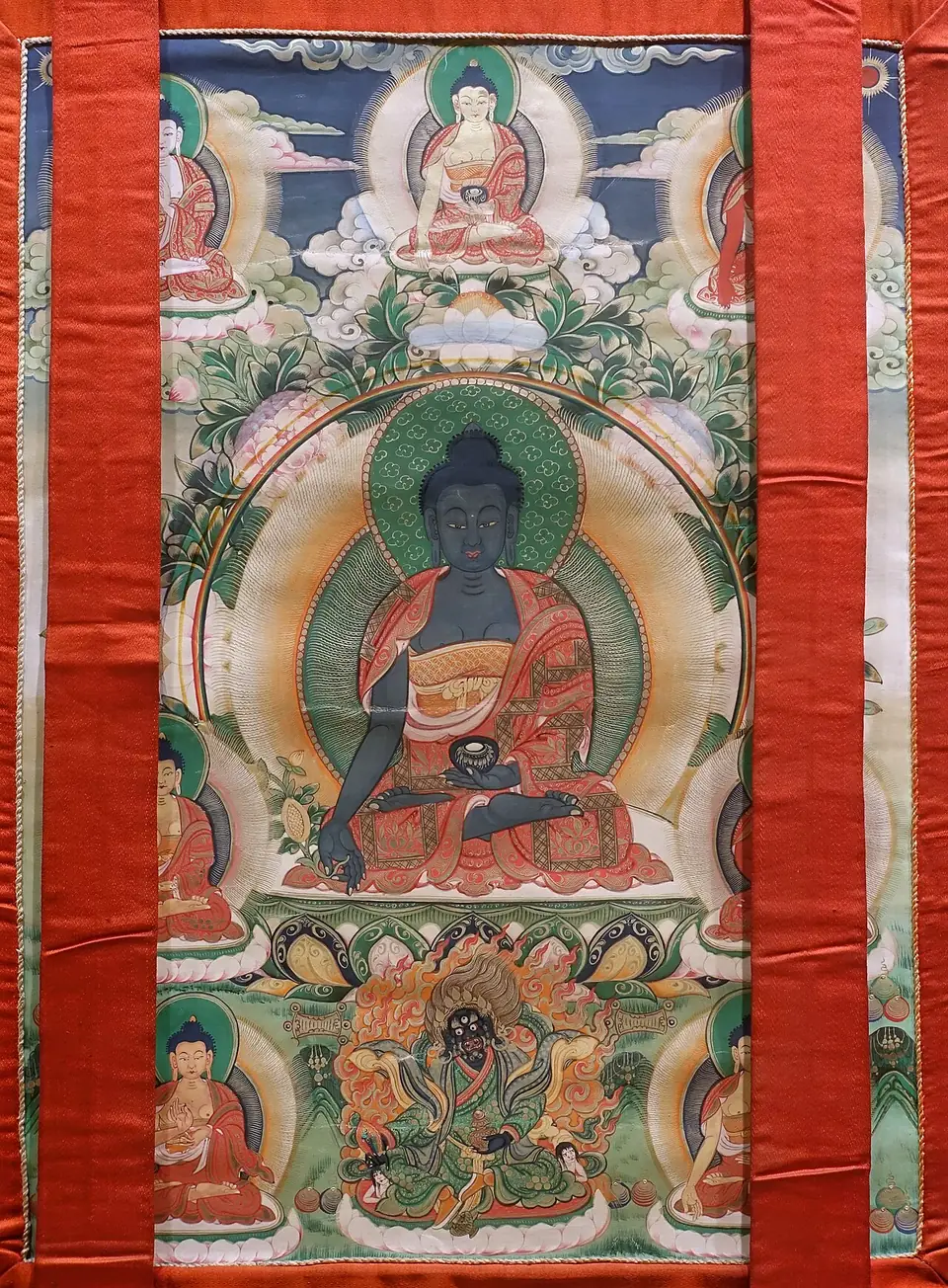
A thangka is a painting on cotton cloth, mounted on a silk brocade and hung. Those of the Medicine Buddha are among the most beautiful and widespread. They serve for meditation, for teaching and for the sacred decoration of temples.
A “measured” painting
A Buddha’s body is not invented: it follows proportions fixed by iconometric texts. The painter begins by drawing a grid in chalk or charcoal, then places head, torso and knees according to units of measure taken from the finger widths of the image itself. This is what gives thangkas their harmony, and lets a connoisseur check that a statue or painting respects the tradition.
Colours from the mountain
The cloth is primed with chalk and animal glue, then polished. Traditional pigments are mineral and vegetal: azurite and indigo for blues, malachite for greens, cinnabar for reds, orpiment for yellows, and gold powder for ornaments. Lapis lazuli, very expensive, was reserved for exceptional works. Bright, durable colours have carried works such as the 13th–14th century thangka at the Art Institute of Chicago, which decorates the home page of this site, through the centuries.
The eye that is opened
In many lineages the Buddha’s eyes are painted last, in a moment of concentration, then the image is consecrated by a lama. This rite moves the object from decoration to support for practice.
The schools
Thangkas are painted in several styles. The Tibetan Menri and Karma Gadri styles both absorbed influences from Chinese painting, especially in landscapes; the Newar painters of the Kathmandu valley, whose workshops supply much of today’s thangkas, have their own manner, richer in motifs. In Japan, paintings of Yakushi on silk or paper follow another tradition, closer to Tang China, like the Kamakura-period scroll with the twelve generals kept at the Cleveland Museum of Art.
Paintings to teach medicine
Tibet produced a set of medical paintings without equal: the 79 thangkas that illustrate the “Blue Beryl” (Vaiḍūrya sngon po), the great commentary on the medical treatise Four Tantras, commissioned at the end of the 17th century by the regent Desi Sangye Gyatso. They show plants, organs, instruments. Tibetan physicians used them like anatomical plates. The first plate in the series shows the Medicine Buddha and his palace.
Choosing well
A good thangka has a clean drawing, frank colours, detailed faces and an iconography matching the description. Our guide to choosing a thangka gives practical pointers, and the catalogue offers thangkas from several workshops.
Sources
Classics: Jackson & Jackson, Tibetan Thangka Painting: Methods and Materials (1984); Janet Gyatso, Being Human in a Buddhist World (2015) for the medical paintings; museum records for the works cited (Art Institute of Chicago, Cleveland Museum of Art, Rubin Museum).
Read the articleYakushi-ji: the temple born of a vow to heal an empress