Lapis lazuli, the colour of the Medicine Buddha
Why the Medicine Buddha is blue, where the stone comes from and how it is used in art.
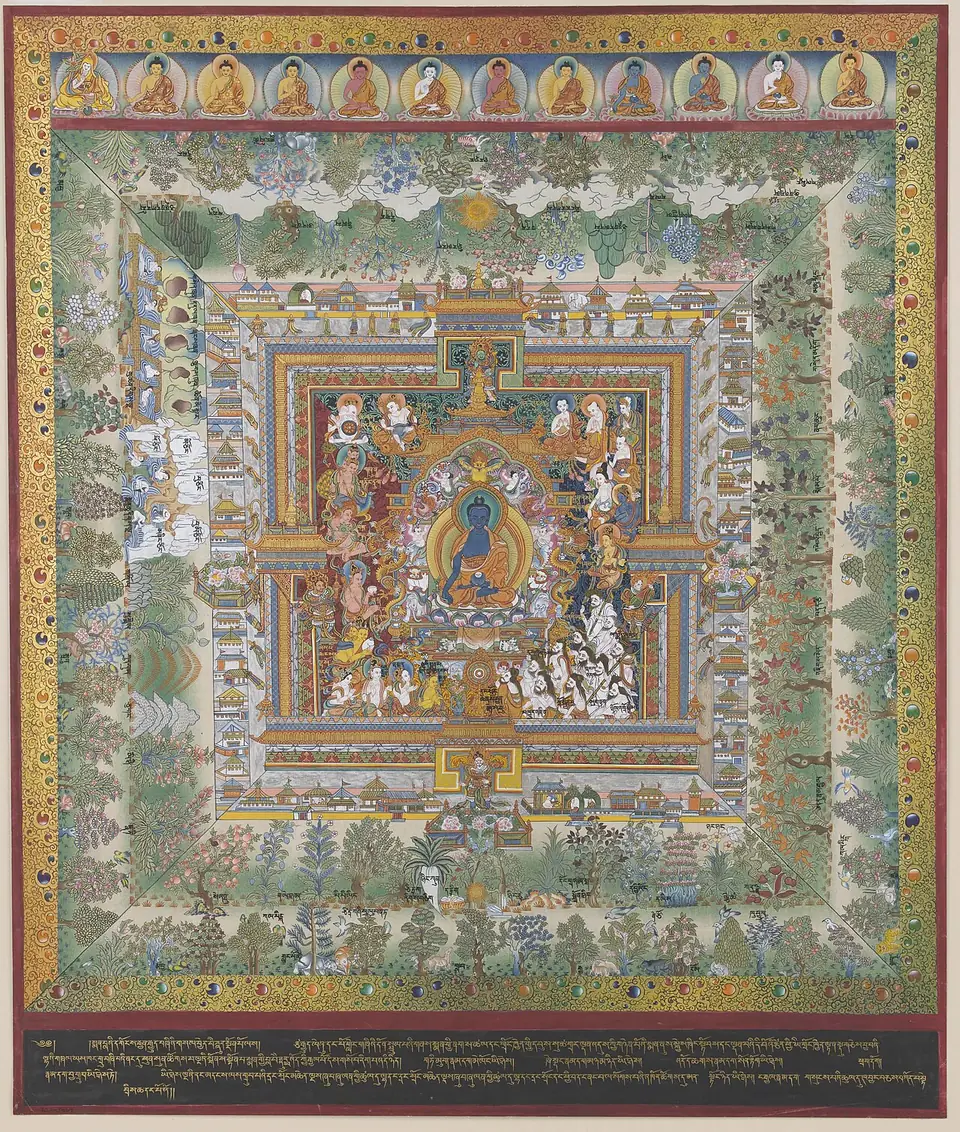
The sūtra describes the Medicine Buddha as radiating a light like vaiḍūrya. The word is often translated as lapis lazuli, although scholars still debate the exact stone (some think of beryl). Either way, the tradition depicts him in deep blue.
A stone from far away
The most famous lapis lazuli comes from the Sar-i Sang mines in Badakhshan, Afghanistan, worked since antiquity. Ground into powder, the stone gave ultramarine, a rare and costly pigment used both in thangkas and in European painting.
A symbol
The blue of lapis suggests depth, purity and clarity. In iconography it immediately singles out the Medicine Buddha among other figures.
In objects
- 108-bead lapis lazuli malas, often used to recite his mantra.
- Jewellery and pendants.
- Thangkas where the blue is sometimes made with mineral pigments.
This site attributes no health properties to stones: they are shown for their beauty and symbolism.
Read the articleThe Medicine Buddha mantra and its meaning