Spiritual health and medicine: what the Medicine Buddha promises, and what he does not
The Buddha as “great physician”, the three poisons, Buddhist hospitals: an important and honest distinction.
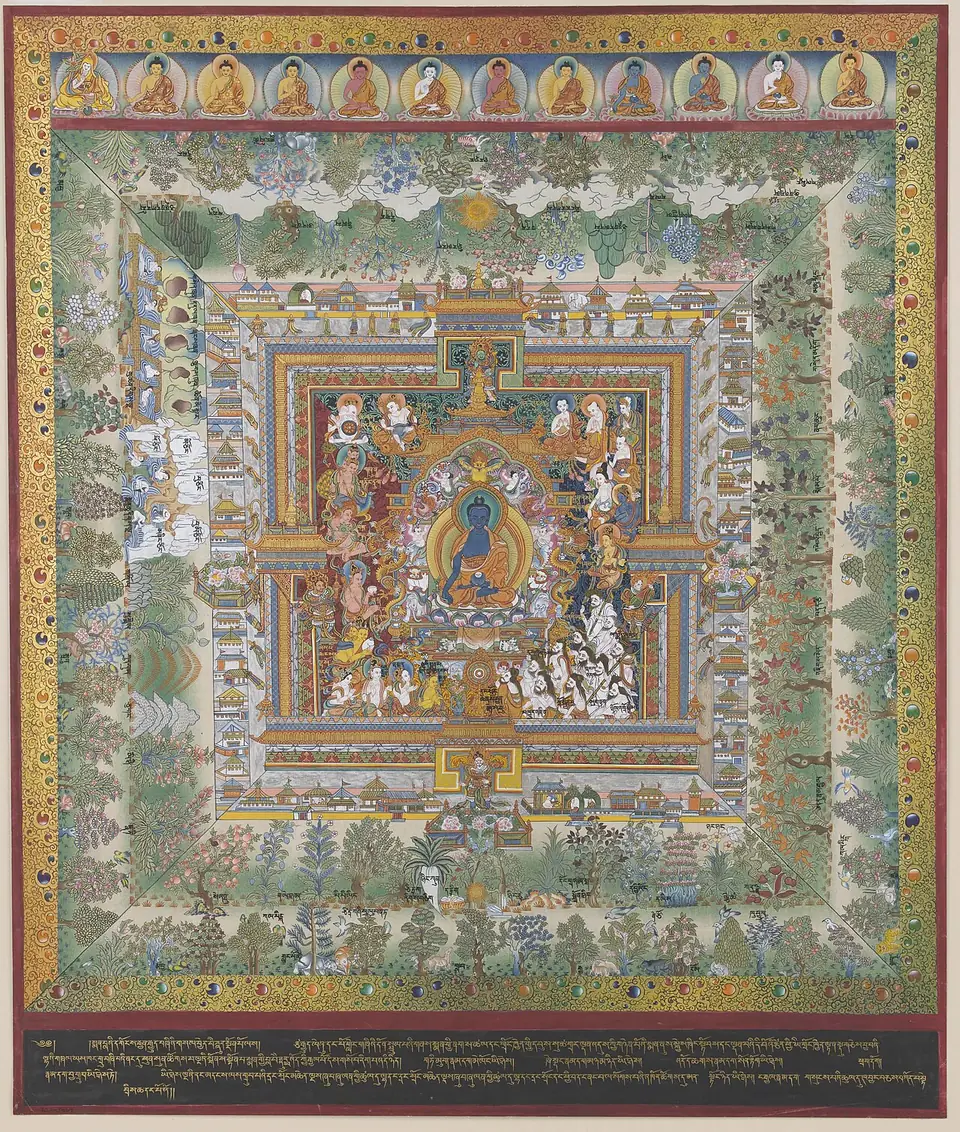
Let us be clear from the start: this site makes no promise of healing. No statue, mantra or practice replaces medical treatment. That said, the image of the Buddha as a physician is one of the most beautiful in Buddhism, and deserves to be understood.
The Buddha, “great physician”
From the oldest texts, the Buddha is compared to a physician. The Four Noble Truths are presented as a medical diagnosis: the illness (suffering), its cause, its possible cure, and the treatment (the path). This is a figure of speech, speaking of the suffering of the mind. In this frame, Bhaiṣajyaguru is a personification of this function: the Buddha as remedy.
The three poisons
In Buddhism the deep causes of suffering are three poisons: craving, anger and ignorance. The “remedies” the sūtra speaks of are above all those for these poisons: generosity, kindness, wisdom. This is why the vows combine the material (food, clothing) and the spiritual (conduct, wisdom).
Health of the body: what the texts say
The sūtra does mention illnesses of the body, infirmities, poverty. It presents them as occasions for compassion, and proposes rites of offering and devotion. Traditions draw from them a sense of accompaniment. They do not read them as a contract.
Tibetan medicine, a Buddhist medicine
In Tibet, traditional medicine (Sowa Rigpa) is based on the Four Tantras and attributes them to the Medicine Buddha. Its physicians recite prayers before preparing remedies. This medicine has its own institutions, herbs and diagnoses. It is recognised in several countries, but its effectiveness for a given illness must be evaluated like any medicine: by studies and by a health professional.
Mutual aid in action
From Emperor Aśoka, whose edicts mention care for humans and animals, to King Jayavarman VII and his Khmer hospitals, Buddhism has often turned its ideal into institutions. Even today, temples offer care and solidarity kitchens.
What can a practice bring?
Practitioners speak of attention, calm, meaning and relationships. Scientific research on meditation and mindfulness is abundant, but it concerns specific practices, and its results are nuanced: it does not establish that a recitation cures an illness. On this site we present objects and practices as cultural and religious traditions.
In practice
If you have a health problem, talk to a doctor. If you wish to add a spiritual practice to your care, tell your care team too. To go deeper on the tradition side, see the twelve vows and daily practice.
Sources
Raoul Birnbaum, The Healing Buddha (1979); Janet Gyatso, Being Human in a Buddhist World (2015); Aśoka’s edicts (Rock Edict II); Ta Prohm stelae.
Read the articleMedicine Buddha objects: what are they for?