From India to Vietnam: the journey of the Medicine Buddha
A figure who changes name, colour and role at each stage: India, Tibet, China, Korea, Japan, Vietnam and Southeast Asia.
Perhaps no other Buddha has travelled so much without changing spirit. Here are the main stages, keeping in mind that historians still debate many points.
India and Central Asia
The Buddha appears in Mahāyāna texts during the first millennium. The Gilgit manuscript, of the 6th–7th century, shows that the text was circulating in north-west India. Monks and merchants carried it along the oases of the Silk Road.
China
The sūtra was translated as early as the 4th century, and the cult developed under the Sui and Tang. The murals of Dunhuang (see the Eastern pure land) bear witness. In many temples Yaoshi Fo sits in a triad with Śākyamuni and Amitābha. In several Chinese communities a feast day is dedicated to him, the 30th day of the ninth lunar month (the date varies by temple).
Korea
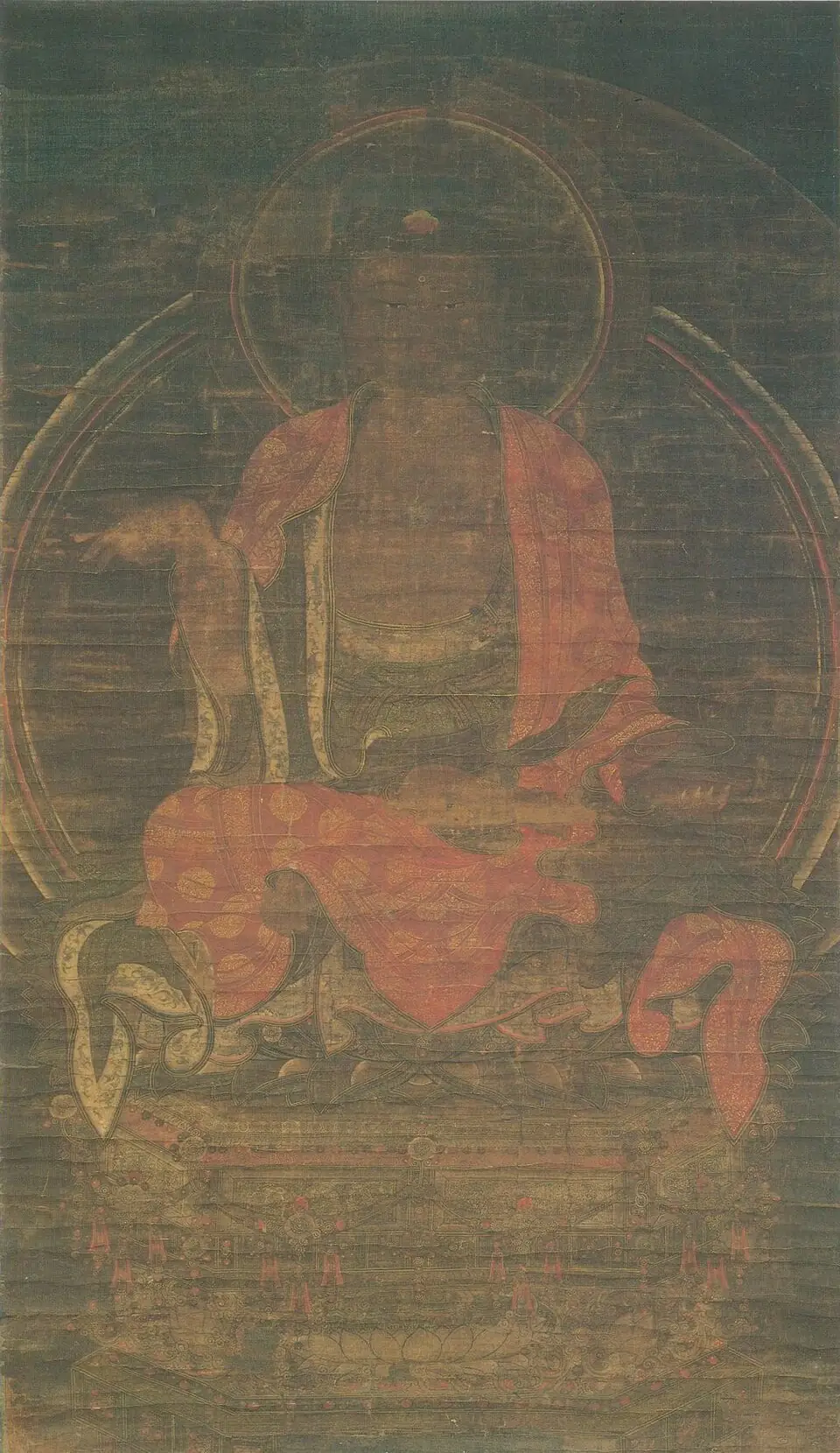
Yaksa Yeorae has been venerated since the Silla period, and there are many Yaksajeon halls in Korean temples. A beautiful Goryeo-period painting (14th century), kept at Banshō-ji in Nagoya, is reproduced on this site.
Japan
The cult arrived in the 7th century, with the foundation of Yakushi-ji and Hōryū-ji. The Tendai and Shingon schools made him a major figure, and Japan today has thousands of temples dedicated to Yakushi. Read Yakushi-ji and the Yakushi temples.
Tibet, Mongolia, the Himalayas
In Tibet, Sangye Menla is linked to Tibetan medicine. The medical tradition teaches that the Four Tantras were revealed by the Buddha in the form of the Medicine Master, in a palace of light called Tanaduk. The great medical college of Lhasa, the Mentsikhang, was founded in 1916 by the 13th Dalai Lama. Mongolian monastic medical schools (manba datsan) perpetuate this link, and in Mongolia the Buddha is Otoch Manla.
Vietnam
Phật Dược Sư is venerated in Vietnamese pagodas, with the sūtra recited in Vietnamese and Sino-Vietnamese. He is a Buddha very present in the ceremonies of the year, and his images stand beside those of Amitābha.
Angkor: the king and the hospitals
In Cambodia, the Khmer king Jayavarman VII (late 12th century) is known, according to the Ta Prohm stele, to have had a very large number of hospitals built (102 are cited). The Medicine Buddha is invoked there, and images of him have been found in chapels of these hospitals. It is one of the clearest examples of the link between this Buddha and concrete mutual aid.
And elsewhere?
The figure is also present among the Buryats, the Newars of Nepal, and in Bhutan. Each region added its colours. The shops of the world gather craftspeople from these countries.
Sources
Raoul Birnbaum, The Healing Buddha (1979); Janet Gyatso, Being Human in a Buddhist World (2015); Ta Prohm inscription (stele of Jayavarman VII); Dunhuang Academy. Several dates (local cults, feasts) come from tradition and vary from one temple to another.
Read the articleSpiritual health and medicine: what the Medicine Buddha promises, and what he does not