Chakpori and Men-Tsee-Khang: three centuries of Tibetan medical colleges
From the Lhasa hill to Dharamsala, the story of the places where the medicine of the Medicine Buddha was taught.
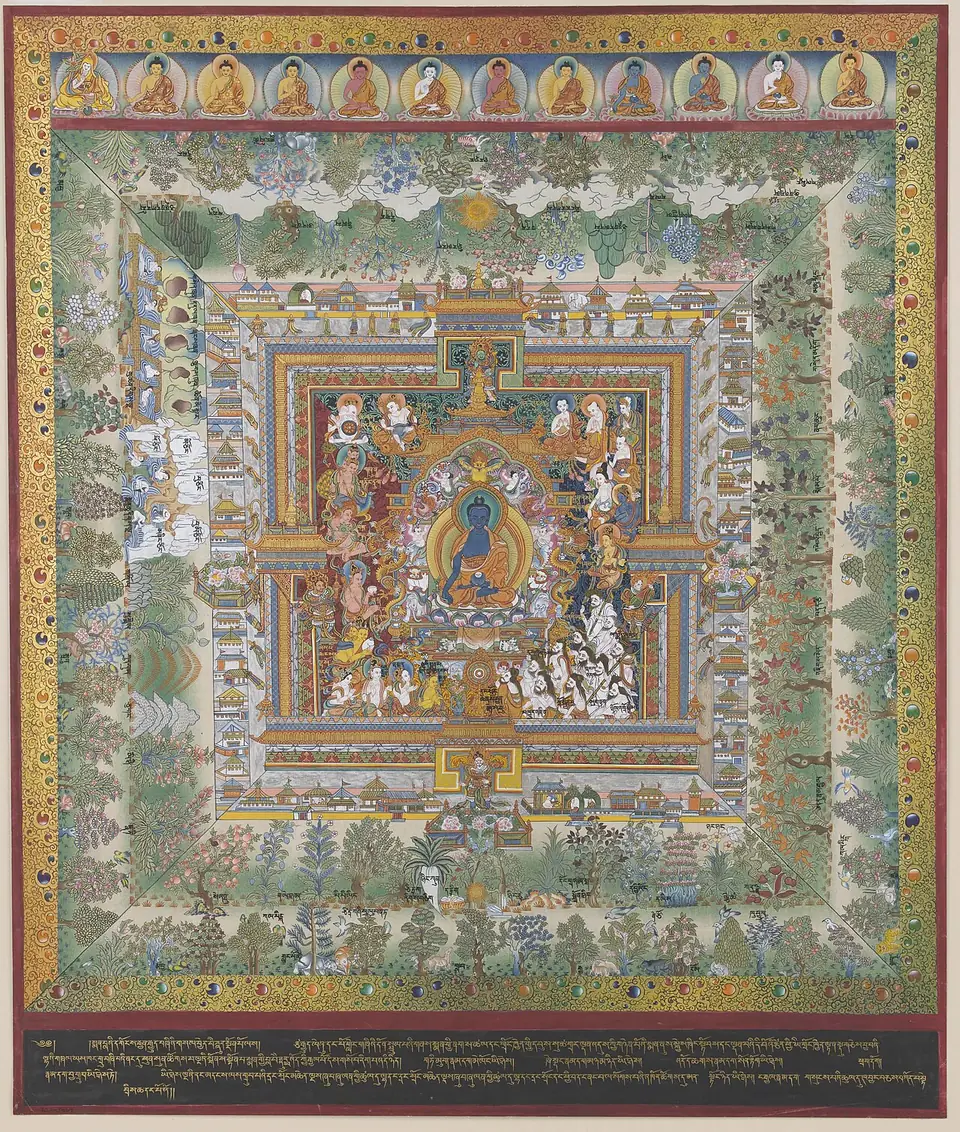
The Four Tantras were not handed down by chance. They were passed on in schools, often monastic, which trained generations of physicians. Two names recur: Chakpori and Men-Tsee-Khang.
Chakpori: the iron hill
In 1696 (some sources say 1694) the regent Desi Sangye Gyatso founded in Lhasa a medical college on Chakpori hill, “the iron hill”, facing the Potala. Students learned the Four Tantras, plants and diagnosis. They recited texts and gathered herbs in the mountains. The college operated for well over two centuries. According to the usual sources it was destroyed in 1959, during the events in Lhasa.
Men-Tsee-Khang: the house of medicine and astrology
In 1916 the Thirteenth Dalai Lama founded the Men-Tsee-Khang institute in Lhasa (“House of Medicine and Astro-calculation”), echoing the Chakpori project. A patron, Khenrab Norbu, financed the building. The institute combines two traditional knowledges: medicine (sorig) and astrology. In 1959 it ceased work in Lhasa. It was re-established in exile at Dharamsala, India, in 1961.
Today
The Men-Tsee-Khang of Dharamsala has opened branches in India and abroad and runs a shop and bookstore. This site does not repeat its health claims; it only points to cultural resources. Tibetan medicine is also taught in Mongolia, Bhutan and China; see Manba Datsan in Mongolia.
A link with the Medicine Buddha
Tradition places the origin of medical knowledge in the teaching of the Medicine Buddha, Sangye Menla, whom students traditionally honour. See also the Four Tantras.
Uncertainties
The founding date of the Chakpori is given in two ways; the circumstances of its destruction are told from different viewpoints.
Sources
Wikipedia, entries “Chagpori” and “Men-Tsee-Khang”; Rubin Museum of Art, Project Himalayan Art; Satyori, entry “Desi Sangye Gyatso”; Men-Tsee-Khang official site (history of the institute).
Read the articleSorig in a few words: a short lexicon of Tibetan medicine