Sorig in a few words: a short lexicon of Tibetan medicine
Sowa rigpa, rlung, tripa, béken: understand the words before reading a book or visiting an institute.
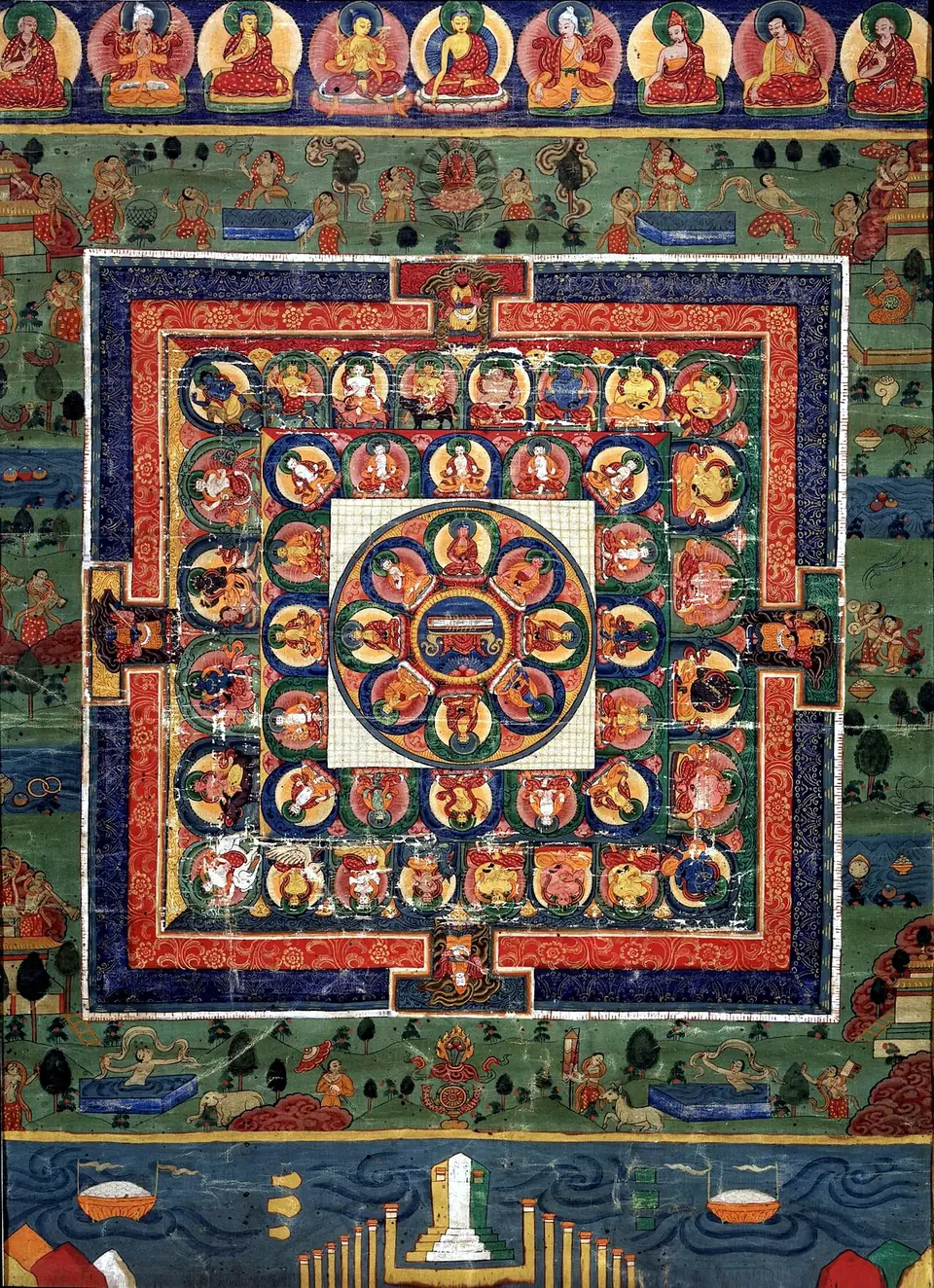
Traditional Tibetan medicine goes by several names: sowa rigpa (“science of healing”), sorig for short. It is tied to the Medicine Buddha through its legend of origin (see the Four Tantras). Here are a few words.
Basic words
- Sowa rigpa (གསོ་བ་རིག་པ): “the science of healing”, the Tibetan name for traditional medicine.
- Gyushi (རྒྱུད་བཞི): “the Four Tantras”, the founding text.
- Menpa: the physician.
- Men: the medicine, often a mixture of plants, minerals and other substances in traditional “pills”.
- Menla (སྨན་བླ): “master of remedies”, the name of the Medicine Buddha.
The three humours
The theoretical frame of sorig rests on three principles, called nyépa (“faults”): lung (“wind”), tripa (“bile”) and béken (“phlegm”). They do not name substances in the sense of modern medicine: they are categories used to describe how body and mind function.
A link with the three poisons
Tradition links these three principles with the three poisons of the mind: attachment to wind, aversion to bile, ignorance to phlegm. It is a symbolic correspondence, showing why the Medicine Buddha is invoked for both body and mind (see spiritual health and medicine).
An important note
This lexicon is given to understand a culture. It is not a care guide: for any health problem, consult a health professional.
Sources
Tibetan Buddhist Encyclopedia, entries “Sowa Rigpa” and “Three Humors”; Men-Tsee-Khang, introduction to Tibetan medicine; Rubin Museum of Art, Project Himalayan Art, essays on medical painting.
Read the articleAngkor: the king who built one hundred and two hospitals under the gaze of the Medicine Buddha