Mongolia: Otoch Manal and the monastery medical schools
On the steppe the Medicine Buddha has a name in Mongolian, and monasteries had their own medical colleges.
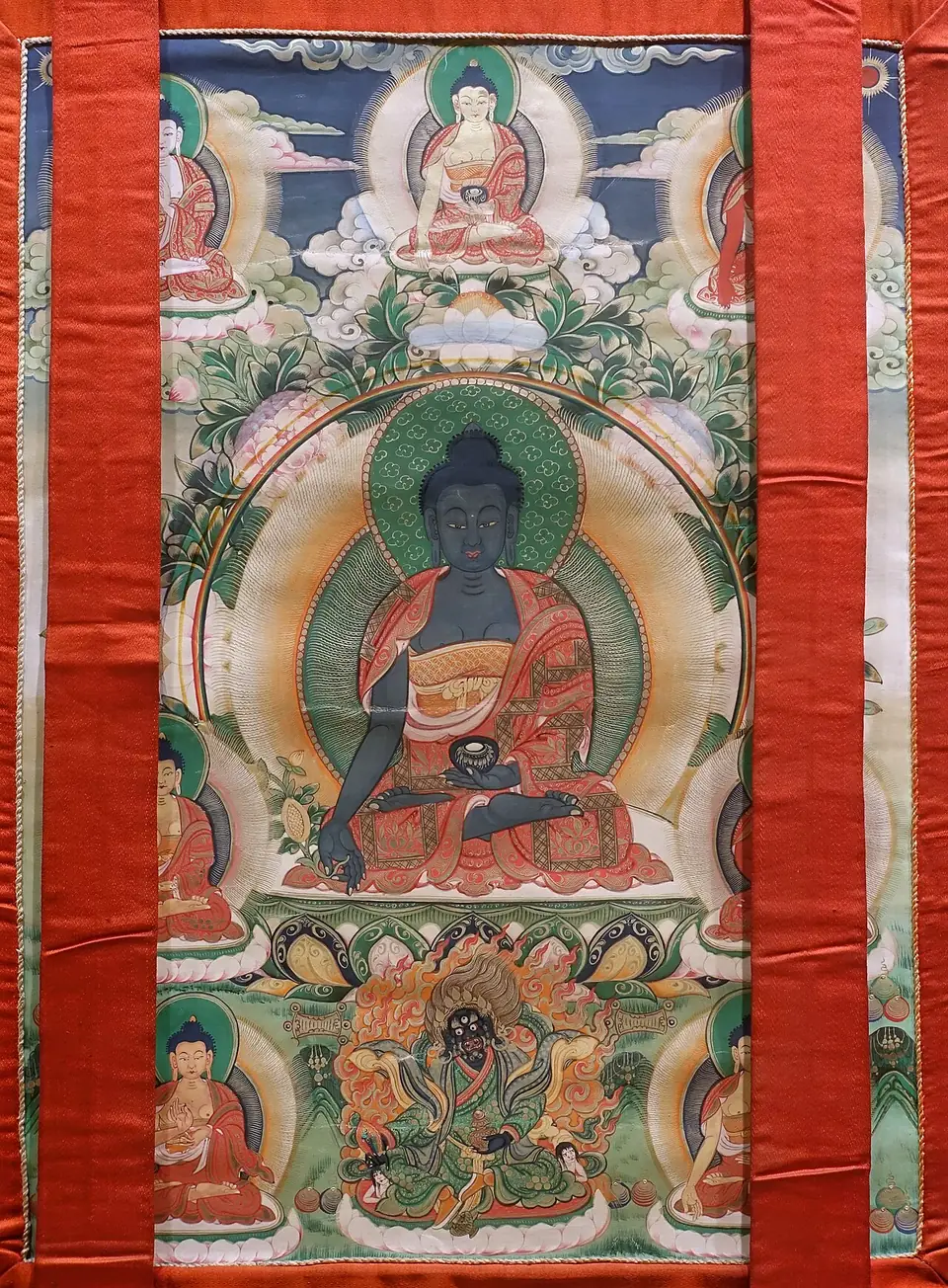
In Mongolian the Medicine Buddha is Otoch Manal (or Otoch Manla). The word “otoch” means a physician, one who treats with plants; “manal” means medicine. The name answers the Tibetan Sangye Menla.
A Buddhism from Tibet
Tibetan Buddhism spread in Mongolia from the sixteenth century, then flourished in the seventeenth and eighteenth. With it came paintings, texts and the medicine of the Four Tantras. Mongolian monasteries often had a medical college, called a Manba Datsan.
The Manba Datsan
From the seventeenth to the twentieth century the Manba Datsan trained monk-physicians, the “manba” or lama-doctors, on the Four Tantras, with contributions from Mongolian and Chinese knowledge. Their teachers also wrote treatises on the diseases of their time, whose diversity recent studies have shown.
A manuscript sūtra
The British Library’s Endangered Archives Programme (EAP529) lists a manuscript titled “Manal healing sutra”: a sign of the place such texts held in monastery life.
The twentieth-century break
In the 1930s most Mongolian monasteries were closed or destroyed. After 1990 Buddhism was re-established, and teaching activities have resumed in Ulaanbaatar.
Today
A Manba Datsan operates in Ulaanbaatar. The Medicine Buddha-related objects we list are in the catalogue.
Uncertainties
Spellings of the name vary (Otoch Manal, Otoch Manla); the exact number of Manba Datsan in each period is hard to establish.
Sources
Wikipedia, “Traditional Mongolian medicine”; PMC, “History of traditional Mongolian medical education based on Manba Datsan: a literature review”; MDPI Religions 10 (4), 2019, “Mongolian Buddhist Scholars’ Works on Infectious Diseases”; British Library, Endangered Archives Programme, EAP529.
Read the articleThe Medicine Buddha calendar: the 8th, the 30th of the ninth month, and other dates