Shin-Yakushi-ji: eleven clay generals standing guard for more than a thousand years
In Nara, Japan’s oldest set of the twelve generals is made of raw clay, and one of them had to be replaced.
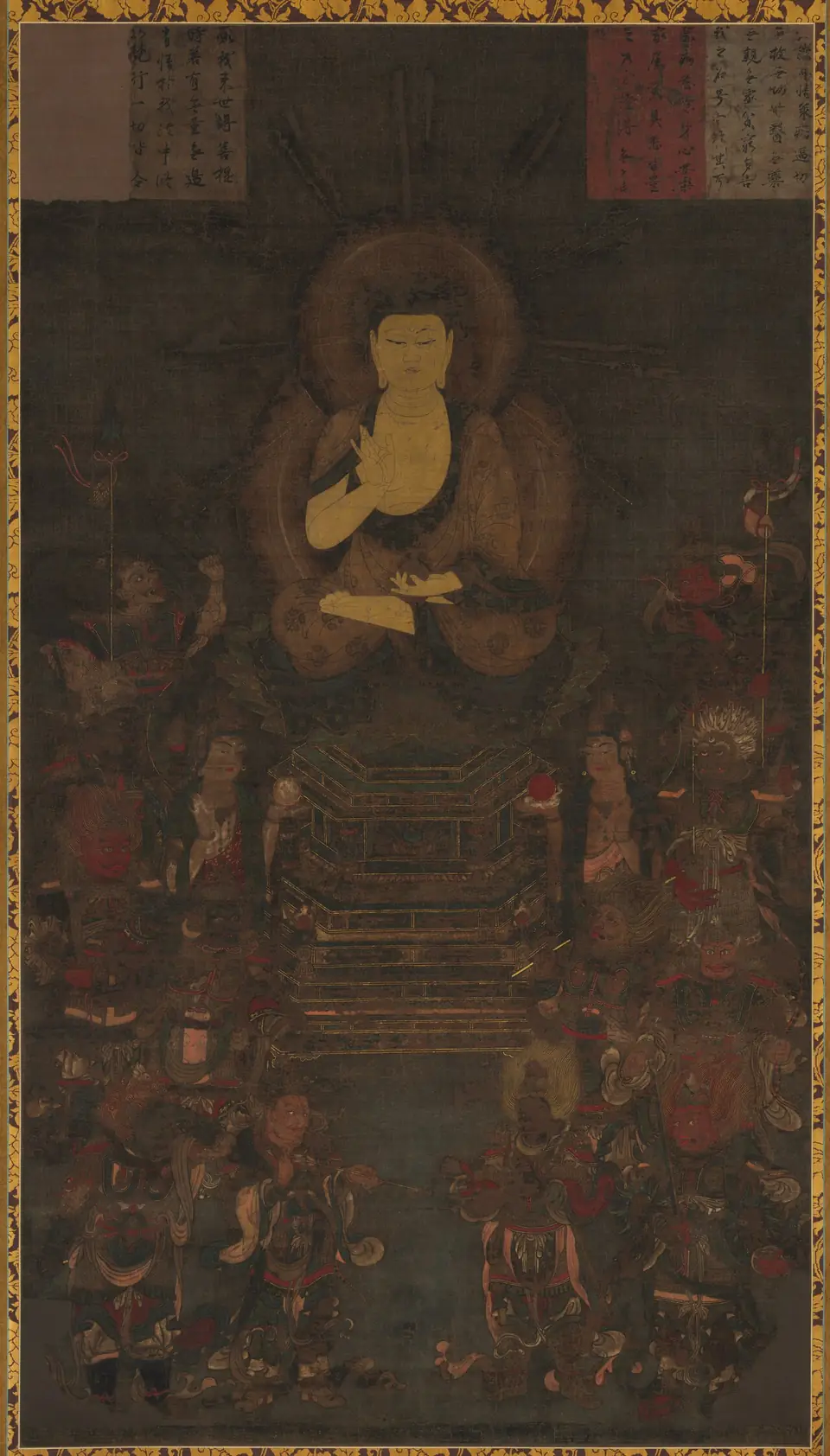
Step into the main hall of Shin-Yakushi-ji in Nara: the light is low and the statues stand in a circle around the Buddha, twelve generals of almost human size, made of raw clay, some red, others faded by time. It is the oldest surviving set of its kind in Japan, from the Tenpyō era (729–749).
A foundation for an ailing ruler
Temple tradition says it was founded in 747 by Empress Kōmyō so that her husband, Emperor Shōmu, would recover his health. The name, “New Yakushi-ji”, tells you not to confuse it with the older Yakushi-ji in Nara (see the history of Yakushi-ji).
Clay statues
The twelve generals are made of clay (sozō), a hard material to preserve: it needs a wooden frame and straw, then several layers of earth, before painting. That is exactly why so few examples have survived. Eleven date from the Nara period and are National Treasures. The twelfth, damaged in an earthquake, was replaced in 1931 by a wooden statue, which does not have National Treasure status. Sources disagree on the name of the replaced general: Haira, Kubira or Bikara depending on the account.
Faces with character
The sculptors gave each general a temperament: bulging eyes, open mouths, furrowed brows, fighting stances. Basara (Bazara), with his upright hair, is the best known. These statues are a fine example of Nara-period realism.
Going further
On the figures themselves, see the article on the twelve generals. For other Japanese temples, see Yakushi temples in Japan.
Uncertainties
Founding dates are those of the temple’s tradition; the identity of the general replaced in 1931 varies between publications.
Sources
Shin-Yakushi-ji official site (twelve generals page); Japan’s Agency for Cultural Affairs (cultural properties database); Nippon.com, features “The 12 Heavenly Generals at Shin-Yakushiji, Nara”; Wikipedia, “Shin-Yakushi-ji” (for cross-checking).
Read the articleHōryū-ji: the Yakushi inscription that tells of a vow made in 586