Korea: Yaksa Yeorae, a Buddha serving the kingdom of Silla
In ancient Korea the Medicine Buddha was not only a figure of personal piety: he was also invoked for the safety of the kingdom.
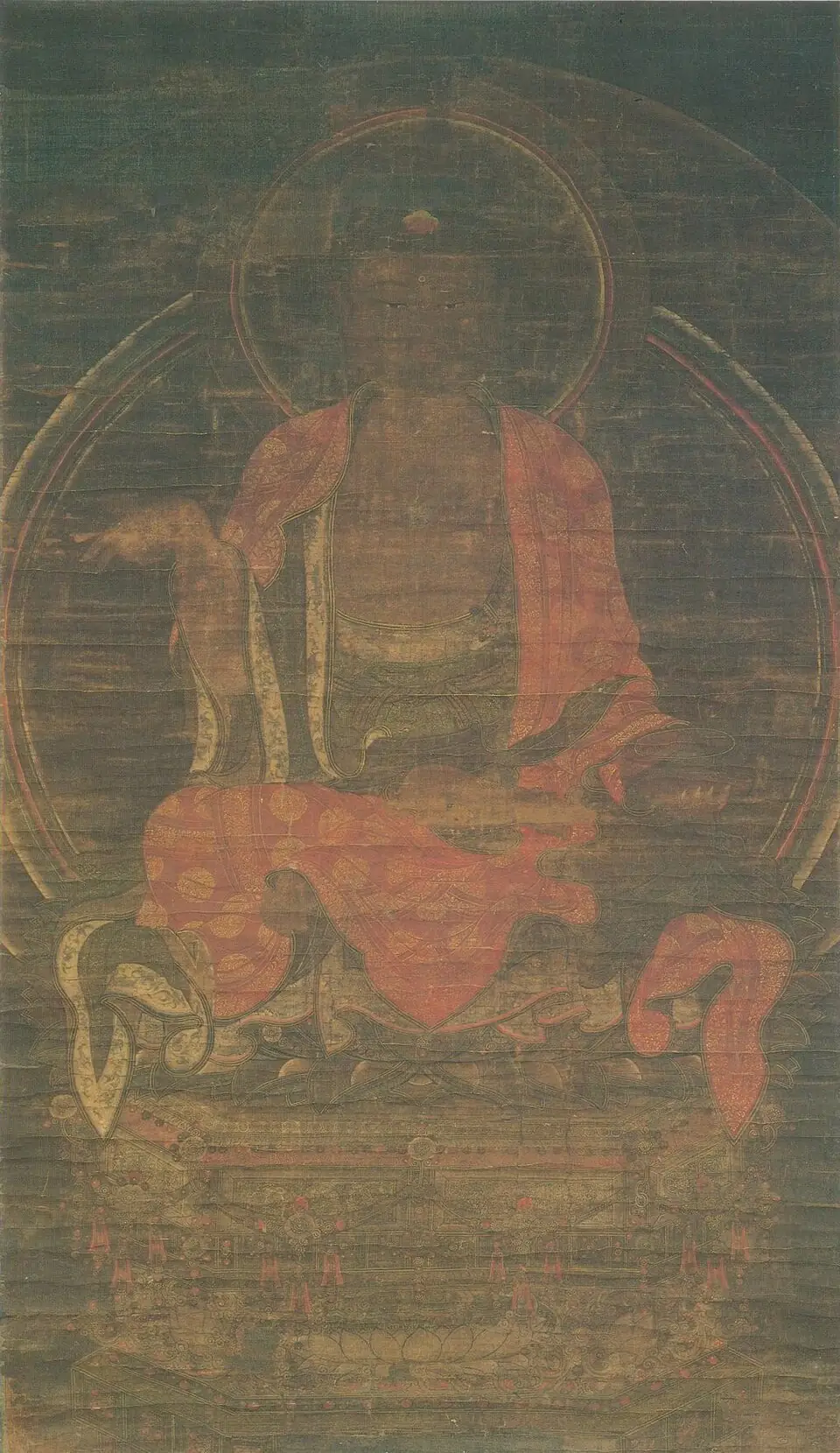
In Korea the Medicine Buddha is called Yaksa Yeorae (약사여래) or Yaksabul. His cult grew greatly under Unified Silla (seventh to tenth centuries).
A devotion with several faces
Korean scholars describe a cult that mixes several motives: longevity, protection of the kingdom from calamities, rebirth in a pure land. The rites include recitation of the sūtra, lamp offerings, five-coloured banners and collective ceremonies.
Commentators
Several Silla monks wrote on the sūtra. Gyeongheung (seventh century) wrote a commentary now lost and known through quotations. Taehyeon (eighth century) left a commentary that has survived (Bonwon Yaksa gyeong gojeok). The great Wonhyo wrote on other texts; his surviving medical commentary concerns the Golden Light Sūtra, not the Medicine Buddha Sūtra, a common mix-up.
A statue dated 755
The tradition of Baengnyulsa temple near Gyeongju attributes to the year 755 a large gilt-bronze statue of Yaksa Yeorae. Art historians count it among the great examples of Silla Buddhist sculpture. The file is complex, and we refer to the sources.
After Silla
In the Goryeo period (918–1392) the Medicine Buddha is painted with great care. One of the most famous paintings, kept at Banshō-ji in Nagoya, Japan, is reproduced on this site. In Korean temples there are “Yaksajeon”, halls dedicated to Yaksa Yeorae, often beside the main hall.
For comparison
In Japan the same Buddha became one of the most venerated (see Yakushi-ji); in China he is tied to the eastern triad (see the journey through the countries).
Uncertainties
The date 755 is the tradition’s; the exact attribution and provenance of several pieces are debated; not all the commentaries cited have survived.
Sources
Encyclopedia of Korean Culture (Academy of Korean Studies), entries “Yaksa Yeorae” and “Yaksagyeongso”; KCI scholarly articles on the Yaksa cult in Silla; Korean Journal of Medical History, article on commentaries on the Golden Light Sūtra.
Read the articleMongolia: Otoch Manal and the monastery medical schools