The sūtra and its versions: a textual history
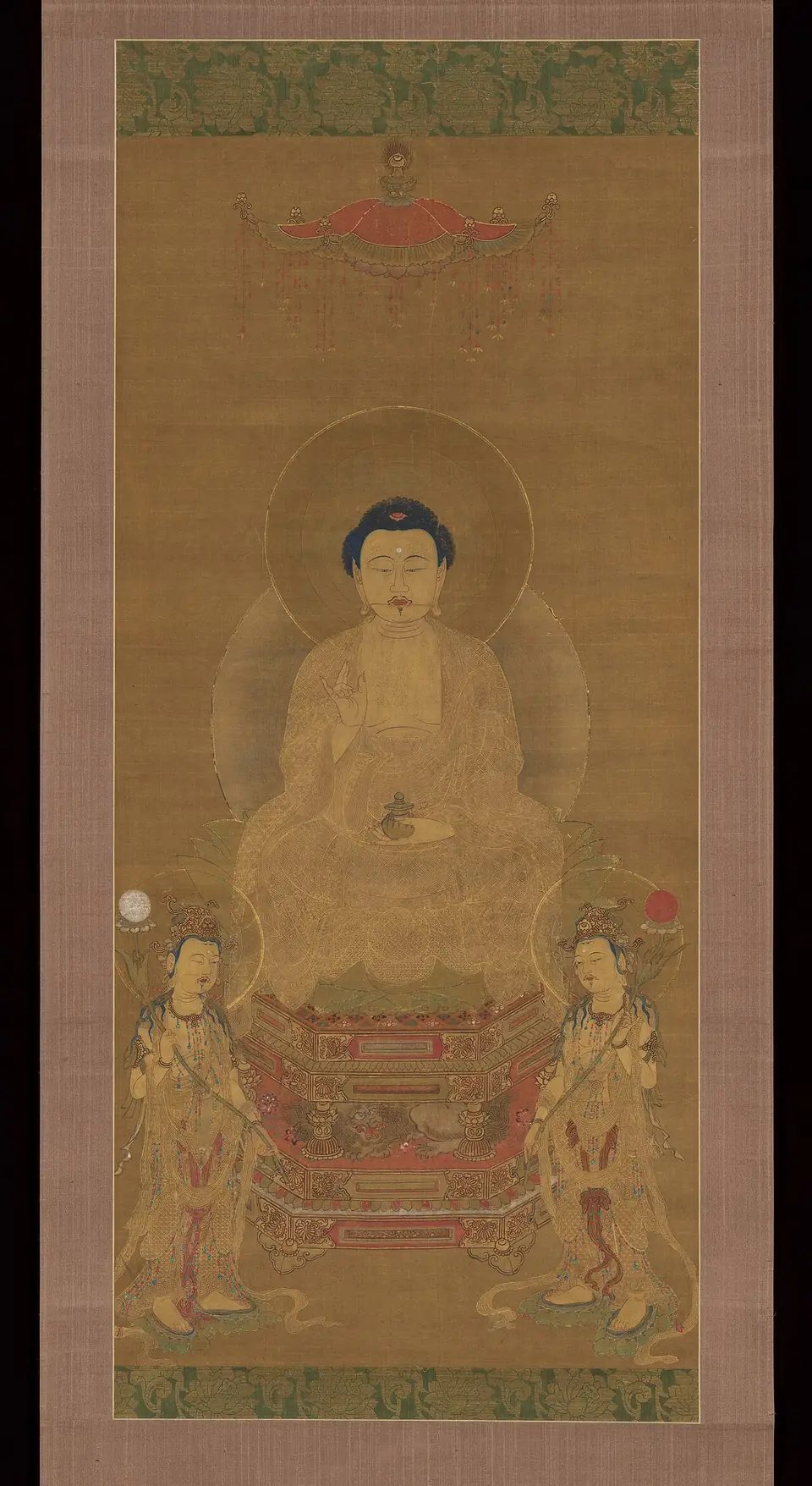
Gilgit manuscripts, Chinese translations from 615 to 707, the Tibetan version: what is known about the history of the Medicine Buddha Sūtra.
What the sources say
Established
Sanskrit birch-bark manuscripts of the Sūtra of the Master of Medicine (Bhaiṣajyaguru-sūtra) are among the Gilgit manuscripts, found from 1931 onwards and dated palaeographically to the 5th–6th centuries. The collection has been on UNESCO’s Memory of the World Register since 2017.
Established
Nalinaksha Dutt published a first edition in 1939. In 1978 Gregory Schopen produced a critical edition (“Redaction A”) with the Tibetan version and an English translation. A full facsimile of the New Delhi manuscript appeared in 2025.
Established
The Chinese canon preserves several translations: Dharmagupta’s (615, T449), Xuanzang’s (650, T450), the most recited, and Yijing’s (707, T451), which speaks of seven Medicine Buddhas.
Debated
An older version is found in fascicle 12 of the Consecration Scripture (Guanding jing, T1331), traditionally attributed to the translator Śrīmitra (4th century). Many scholars, including Michel Strickmann, regard it instead as a 5th-century Chinese composition; the status of this version is still debated.
Established
The Tibetan canon contains two sūtras: one devoted to the Medicine Buddha alone, the other to the seven Buddhas; Schopen edited both Tibetan versions.
Sources 2
Debated
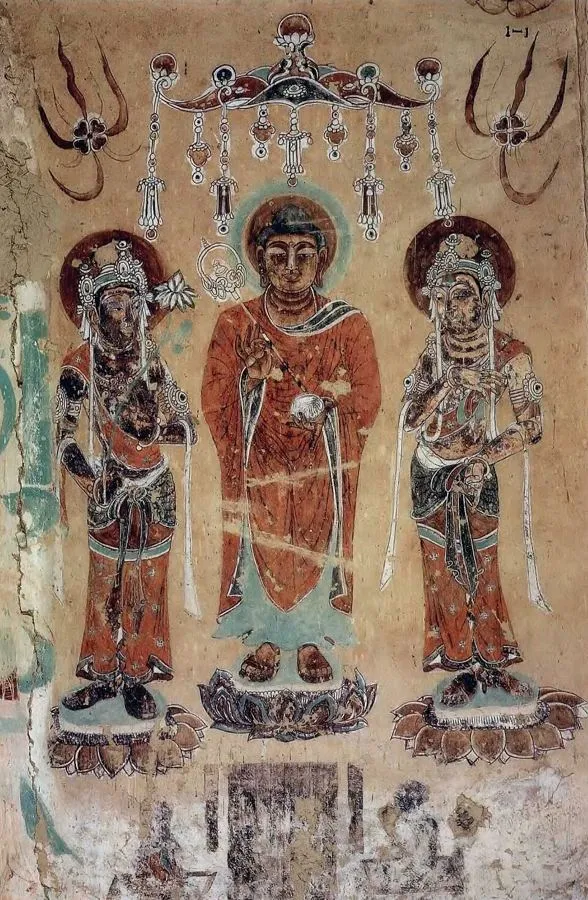
The exact place and date of composition of the sūtra are unknown. JAANUS notes that the Medicine Buddha’s name appears in some 15 texts translated into Chinese from the 3rd to the 5th century and that his cult seems to have been especially popular in Central Asia.
Belief
According to the sūtra itself, the Buddha Śākyamuni taught it at Vaiśālī at the request of the bodhisattva Mañjuśrī, describing the twelve vows of the Medicine Buddha and his Pure Land in the East.
Sources 6
How to read the badges
Established Debated Hypothesis Belief
Established: attested in the sources and accepted by specialists. Debated: specialists disagree. Hypothesis: proposed, not demonstrated. Belief: what the religious tradition says, with no historical claim.
Sources
- UNESCO, Memory of the World Register: “Gilgit Manuscript” (inscribed 2017). www.unesco.org
- Gregory Schopen, The Bhaiṣajyaguru-sūtra and the Buddhism of Gilgit, PhD thesis, Australian National University, 1978. openresearch-repository.anu.edu.au
- Nalinaksha Dutt (ed.), Gilgit Manuscripts, vol. I, Srinagar / Calcutta, 1939. (book)
- J.-U. Hartmann, G. Melzer, T. Fukita (eds.), Gilgit Manuscripts in the National Archives of India, Facsimile Edition, vol. II.6: The Bhaiṣajyagurusūtra, National Archives of India / IRIAB Soka University, 2025 (announcement, H-Net). networks.h-net.org
- CBETA, Taishō T449, 佛說藥師如來本願經 (Dharmagupta, 615). cbetaonline.dila.edu.tw
- CBETA, Taishō T450, 藥師琉璃光如來本願功德經 (Xuanzang, 650). cbetaonline.dila.edu.tw
- CBETA, Taishō T451, 藥師琉璃光七佛本願功德經 (Yijing, 707). cbetaonline.dila.edu.tw
- JAANUS (Japanese Architecture and Art Net Users System), entry “Yakushi”. www.aisf.or.jp
- CBETA, Taishō T1331, 佛說灌頂經 (Consecration Scripture), fascicle 12. cbetaonline.dila.edu.tw
- Michel Strickmann, Chinese Magical Medicine, Stanford University Press, 2002. (book)
Links checked on 15 October 2026.