The story of the sūtra: Mañjuśrī, the Rescuer and the twelve generals
What the best-known text on the Medicine Buddha tells, scene by scene.
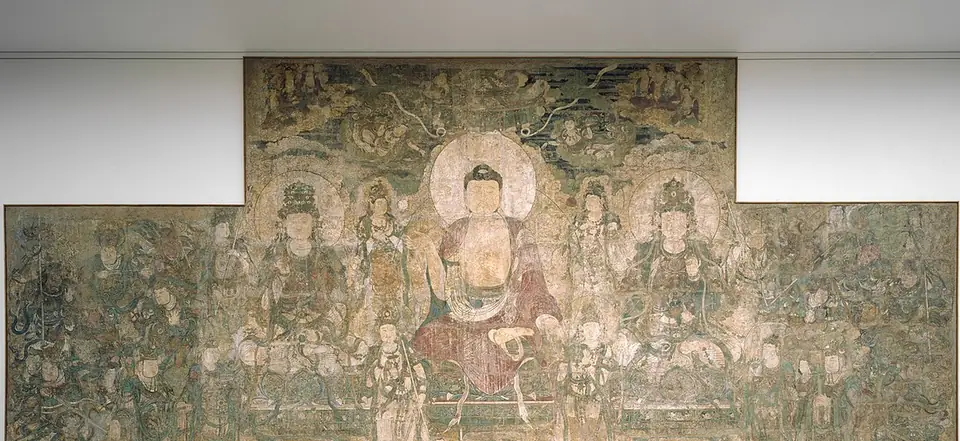
The Medicine Master Sūtra is a story told in several scenes. Following it helps to understand the gestures found later in paintings and temples. We follow here the Chinese translation by Xuanzang (650).
The opening scene
Śākyamuni is staying at Vaiśālī with a great assembly of monks, bodhisattvas, kings and beings of all worlds. The bodhisattva Mañjuśrī rises and asks him to explain the names and vows of the Buddhas of the past, for the good of beings to come.
The Buddha of the East
The Buddha describes a world to the east, at a distance of ten times the number of grains of sand in the Ganges. The Buddha who lives there is called Bhaiṣajyaguru-vaiḍūrya-prabhā, and his world is made of lapis lazuli. He lists the twelve vows (see the twelve vows in detail) and describes the beauty of his pure land (see the pure land).
The Rescuer
Later in the text another bodhisattva, called the “Rescuer” (Jiutuo, 救脫), asks the Buddha how to help those who are gravely ill. The Buddha answers by describing rites. He also mentions “nine untimely deaths”, a list of misfortunes that the text invites us to avoid through conduct and practice.
The rites described
The sūtra recommends taking refuge, keeping precepts for a period, making offerings and reciting the text. It provides for lighting lamps, many five-coloured banners and other acts. The numbers are symbolic: forty-nine comes up several times. We report these rites as elements of tradition, not as remedies.
The generals
The twelve yaksha generals rise to swear to protect those who follow these practices. See the twelve generals.
The ending
Ānanda asks for the name of the text, and the Buddha gives him several titles. The assembly rejoices.
Uncertainties
Versions of the sūtra differ (number of vows, details of the rite): the one summarised here is Xuanzang’s translation; check which version you are reading if you use another edition.
Sources
Medicine Master Sūtra, trans. Xuanzang, T. 450; trans. Yijing, T. 451; Raoul Birnbaum, The Healing Buddha, Shambhala, 1979.
Read the articleThe twelve generals: the army that guards the Medicine Buddha